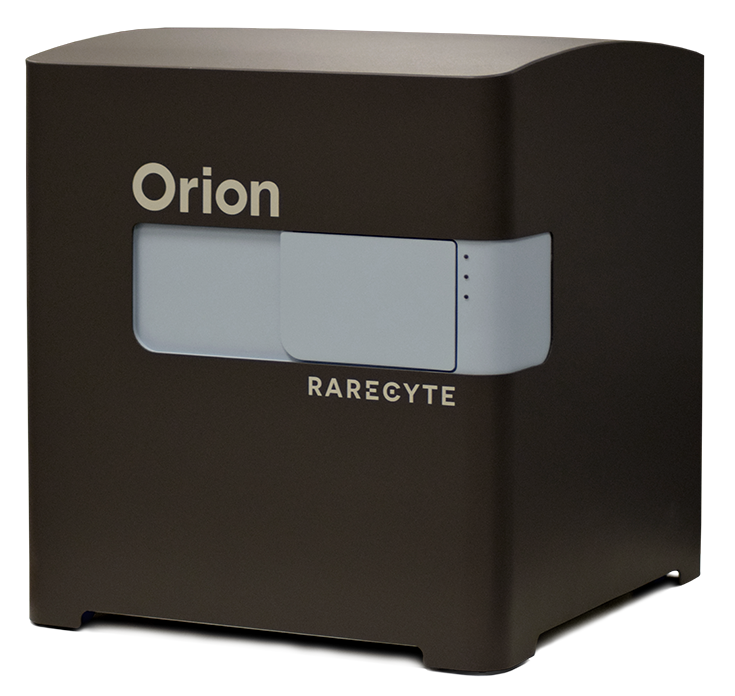


The whole-slide, highly multiplexed biomarker imaging platform - depth and flexibility with the convenience of a comprehensive, rapid, single cycle process.
Accelerate to discover
Back to filter
Related topics

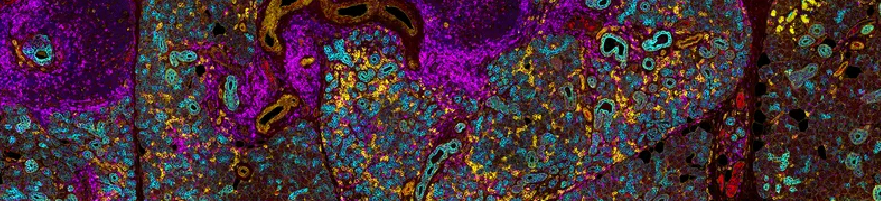
Molecular and Spatial Drivers of Immunotherapy Response in Mucosal Melanoma
Genomic analysis of 80 MM patients revealed that DRs (PFS≥1 year) had significantly fewer copy number alterations (CNAs) compared to patients with progressive disease (PFS≤6 months). Common MM driver mutations were identified, including SF3B1, KIT, NF1, and NRAS. Notably, SF3B1 mutations were predominantly found in anorectal primaries (10/17) and harbored fewer CNAs—a feature also enriched in DRs—suggesting SF3B1 mutations may promote genomic stability and enhance ICB responsiveness.
RNAseq analysis (n=67) identified a tumor cluster enriched for epithelial-mesenchymal transition and hypoxia stress pathways—features associated with poor ICB outcomes—suggesting increased invasiveness and potential resistance, and present in 37% of MM tumors.
Spatial analysis of primary and metastatic lesions revealed increased infiltration of CD8+ T cells and CD11C+ myeloid cells at metastatic sites. By delineating the tumor-stromal interface, we observed distinct localization of CD68+ macrophages, with enrichment at the tumor border in metastatic tumors, indicative of immune exclusion. In sinonasal tumors, non-metastatic patients had fewer tumor-associated macrophages (TAMs; CD163+/CD206+) in both the tumor center and border compared to those who later developed distant metastases, suggesting TAM infiltration may predict metastatic potential. We also identified colocalization of TAMs and regulatory T cells (Tregs; CD4+/FOXP3+) with a tumor subpopulation, indicating a structured immunosuppressive niche. Notably, vulvar/vaginal MM tumors—associated with the poorest outcomes—exhibited marked enrichment of this suppressive microenvironment, underscoring its role in disease progression.
Multimodal analysis of a longitudinally sampled MM patient treated with ICB revealed distinct resistance clones associated with different microenvironments. Two lymph node metastases collected post-ICB showed clonal differences; one (harboring a SOX17 mutation) exhibited lower CD8+ T cell infiltration, suggesting divergent resistance mechanisms.
Related technologies: Automated microscopy and image analysisAutomated microscopy and Spatial Proteomics