

The life science technology company providing unique solutions to next-generation proteomics, unbiased, deep, spatially precise, highly sensitive, and highly specific all in one.
Accelerate to discover
Back to filter
Related topics


Integrated IP-MS and Optoproteomics Reveal Dynamic Remodeling of Protein Interaction Networks
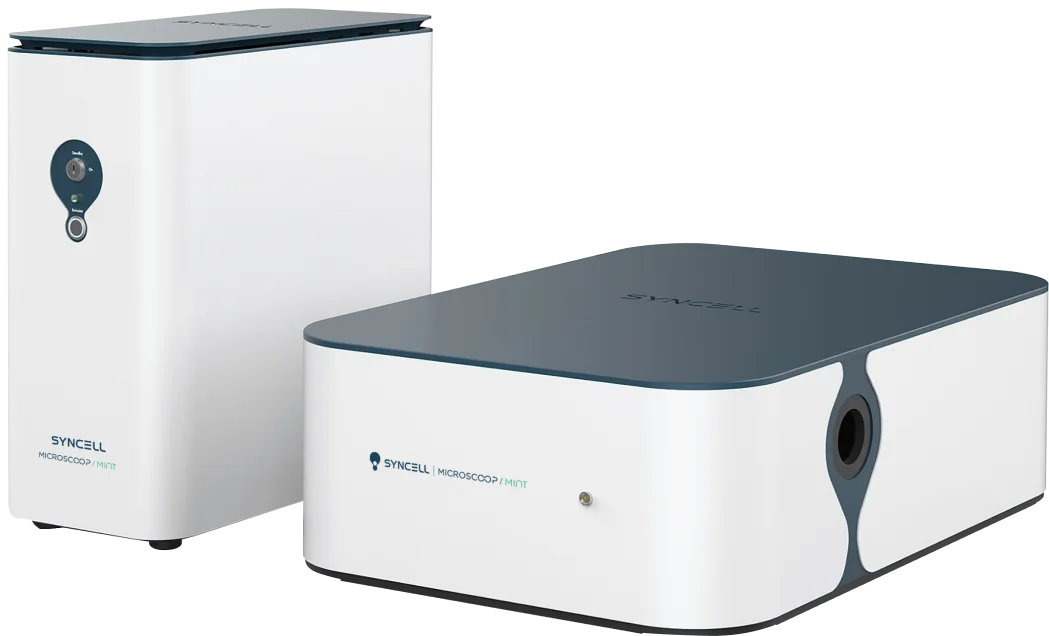
Understanding how the NLRP3 inflammasome assembles and reorganizes its protein interaction network is essential for deciphering the molecular basis of inflammation and for identifying new therapeutic targets. In this study, researchers combined endogenous immunoprecipitation coupled with mass spectrometry (IP-MS) with microscopy-guided optoproteomics to characterize the dynamic remodeling of the NLRP3 interactome during different stages of inflammasome activation. The optoproteomics workflow was performed using the Synlight-Rich™ kit, enabling spatially resolved labeling of proteins located in the immediate vicinity of ASC specks and complementing conventional interactome analysis.
The integrated workflow identified 1,496 stimulus-associated protein interactions (1,032 non-redundant interactions), demonstrating that the composition of the NLRP3 and ASC interaction networks changes substantially depending on the activating stimulus. Different canonical activators generated distinct interaction profiles, highlighting the highly dynamic and context-dependent nature of inflammasome assembly.
To complement interaction mapping, optoproteomics enabled selective profiling of proteins located around ASC specks, providing valuable spatial information that cannot be obtained using conventional affinity purification alone. Integrating both datasets revealed IMMT (inner membrane mitochondrial protein) as the only protein consistently associated with both NLRP3 and ASC while also being enriched within the ASC speck microenvironment.
Functional validation demonstrated that IMMT acts as a negative regulator of NLRP3 inflammasome activation. Silencing IMMT enhanced caspase-1 activation, increased IL-1β secretion, promoted gasdermin D cleavage, elevated LDH release, and stimulated ASC oligomerization, indicating that IMMT helps restrain excessive inflammasome activation and inflammatory signaling.
Conclusions:
- Integration of IP-MS with spatially resolved optoproteomics provides a comprehensive view of protein interaction networks during inflammasome activation.
- The study demonstrates that NLRP3 protein interaction networks are highly dynamic and stimulus-dependent, rather than static molecular assemblies.
- Spatial proteomics enabled the identification of proteins specifically associated with ASC specks, adding an important layer of biological context to conventional interactome analyses.
- IMMT was identified and experimentally validated as a previously unrecognized negative regulator of NLRP3 inflammasome activation.
- These findings establish a valuable proteomic resource for future studies investigating inflammasome biology and potential therapeutic strategies targeting inflammatory diseases.
Related technologies: Automated microscopy and Spatial Proteomics