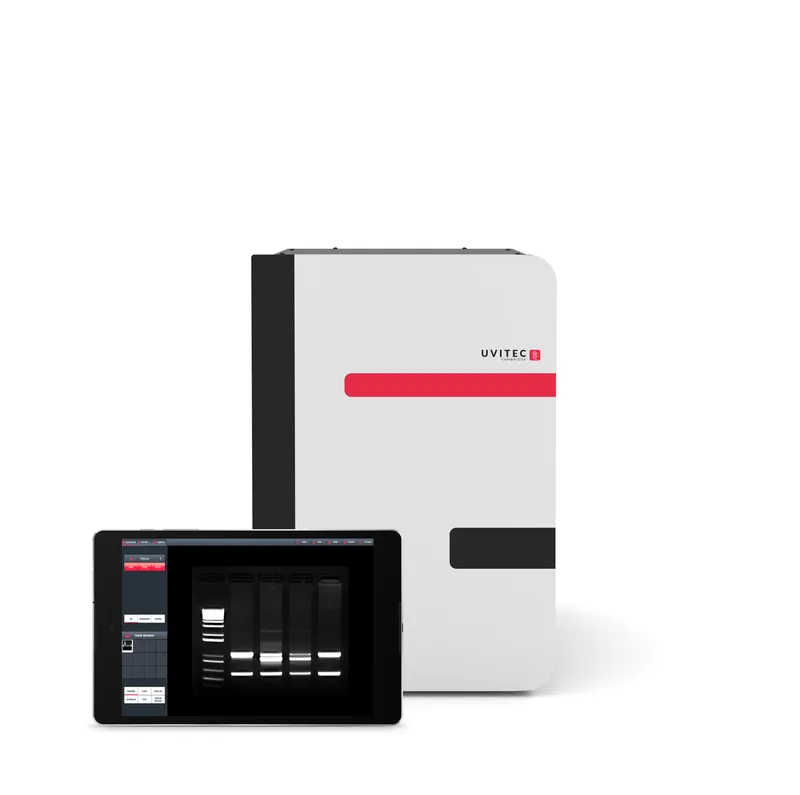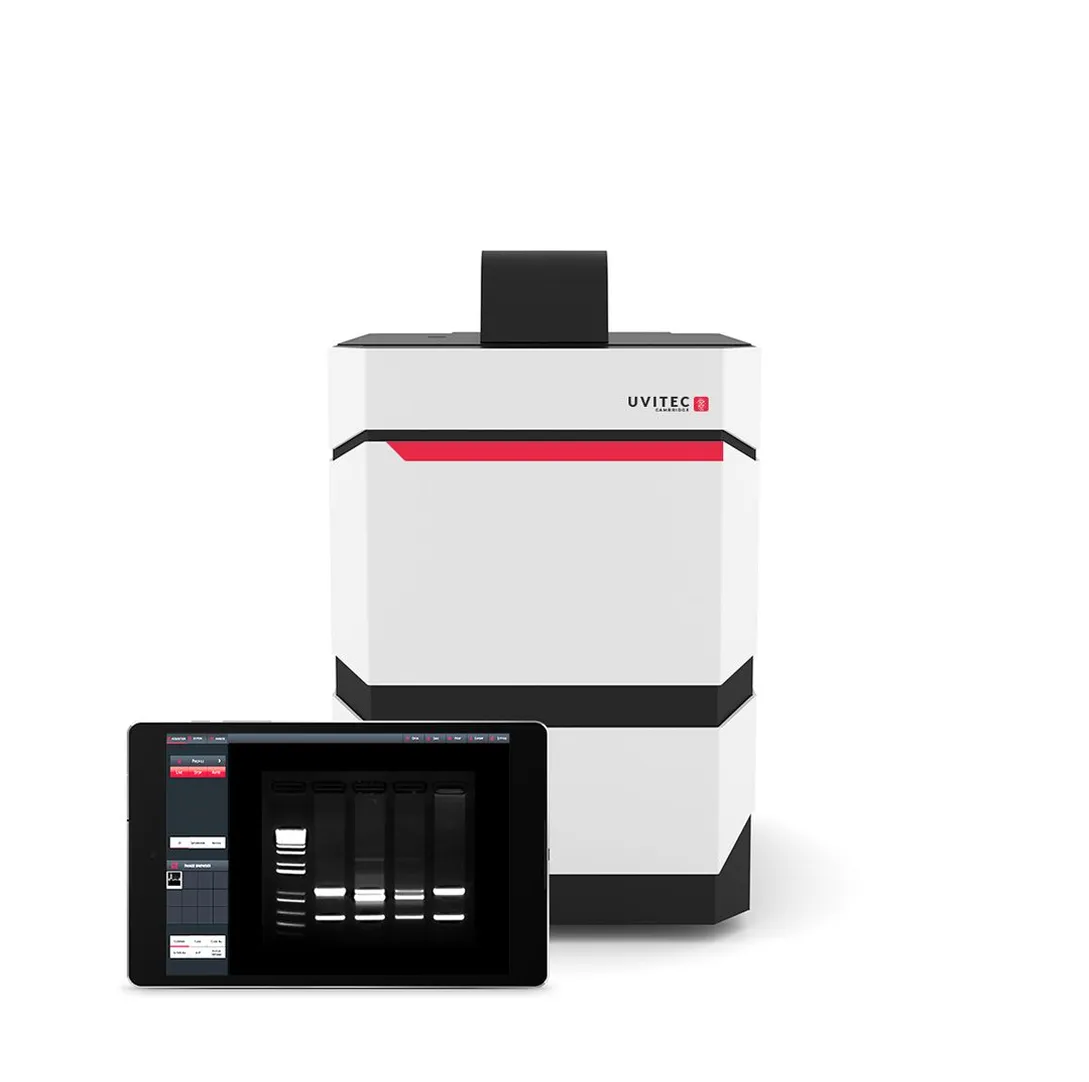


Uvitec is a pioneer in molecular imaging, providing advanced gel documentation and Western blot systems for chemiluminescence and fluorescence. It combines cutting-edge optics with intuitive, integrated technology to simplify workflows and deliver high-sensitivity.
Accelerate to discover
Back to filter
Related topics


Bioluminescence Distribution Of NPs In Rats’ Organs
Introduction
Nanomedicine is the “application of nanotechnology for treatment, diagnosis, monitoring and control of biological systems” (Moghimi SM, et al. FASEB J. 2005) which has risen great expectations (Rawat M, et al. Biol. Pharm. Bull. 2006). Therapeutic and diagnostic nanoagents (nanotheranostics) may improve therapy efficacy while reducing side-effects (Jain KK. Med. Princ Pract. 2008) thanks to extensive multiple functionalization.
Nanoparticles (NPs) are particles between 1 and 100 nanometers in size. In nanotechnology, a particle is defined as a small object that behaves as a whole unit with respect to its transport and properties. Drug delivery is the most immediate and promising test for the actual solidity of the new nanomedical paradigm, since properly designed and multifunctional nano-theranostics are expected to drastically improve drug efficacy, selectivity, biodistribution and biocompatibility. Cardiovascular diseases are a major human health problem, being still the leading cause of deaths worldwide. These pathologies are characterized by an enhanced oxidative stress in vascular walls, heart, kidney and brain. Treatment of heart failure with nano-materials would diminish the expression of inflammatory mediators and molecules that are involved in the cardiac remodelling. NPs disassembly would ensure their biodegradability, diminishing the risk of undesired long-term secondary effects.
In this project we want to test a nanomedical approach to protect cells and heart tissue from oxidative stress. The goal of this work was to test a new nanoparticles platform which could be useful for a therapeutic action in heart.
Evaluation of the distribution of NPs
18 male health Sprague-Dawley rats were injected with 10 mg/Kg of NPs via vein tail. 7 male healthy rats were taken as controls. Rats were sacrificed 1 day, 3 days, 7 days and 2 months after NPs injection and blood and organs were collected. Images of sections of 5-7 mm of lung, heart, liver, kidney and spleen were acquired and analyzed by Alliance Chroma system and Alliance Software (UVITEC Ltd, Cambridge, UK) to identify and quantify NPs-rhodamine conjugated.Nanomedicine is the “application of nanotechnology for treatment, diagnosis, monitoring and control of biological systems” (Moghimi SM, et al. FASEB J. 2005) which has risen great expectations (Rawat M, et al. Biol. Pharm. Bull. 2006). Therapeutic and diagnostic nanoagents (nanotheranostics) may improve therapy efficacy while reducing side-effects (Jain KK. Med. Princ Pract. 2008) thanks to extensive multiple functionalization.
Conclusion
Epi-fluorescence with Alliance Chroma system useful instrument for monitoring and evaluating nanoparticles distribution in different rat organs.
Related technologies: BioImaging