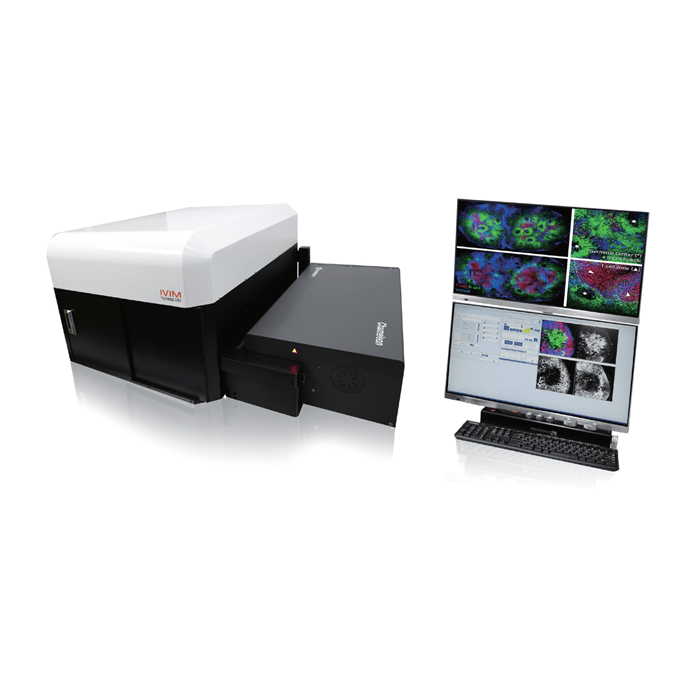


IntraVital Microscopy is a technique that enables you to directly observe the movement of live cells that make up living tissue in vivo.
Accelerate to discover
Back to filter
Related topics


Introducing IVM-FS: Real-Time Cellular Insightsinto Rats and Other Medium-Sized Animals
Rats are increasingly valued for intravital imaging due to their larger body size and organ systems, which enable more precise surgical preparation, stable window implantation, and repeated long-term imaging—advantages over mice. Their physiology and disease progression often better mirror human conditions, making them ideal for studying neuroscience, cardiovascular, metabolic, immune, and cancer biology. With a richer behavioral repertoire, lower stress responses, and recent advances in genetic engineering, rats are now powerful models for mechanistic, real-time cellular imaging across organ systems.
However, real-time imaging in rats and other medium-sized animals presents several challenges. Their size makes surgery more invasive, and maintaining stable challenges. Its open, flexible design supports stable imaging in larger animals, while delivering deep, high-resolution views of dynamic cellular activity—even in thick, moving tissues. With integrated motion compensation and adaptable window setups, IVM-FS makes long-term intravital imaging in rats not just feasible, but highly effectively opening the door to deeper insights into humanrelevant models.
Application Examples:
- Observation of BBB Permeability and Neutrophil Migration and Infiltration
Methods
We conducted intravital imaging in Sprague-Dawley (SD) rats using a cranial imagingwindow model with the IVM-FS system in confocal mode with z-projection. To visualize vascular permeability, we administered FITC-Dextran (2MDa) via intravenous injection. Neutrophils were fluorescently labeled by conjugating Ly6G antibody with FSD555 (IVITM991-0023) and delivering it through IV injection, while blood vessels were counterstained with Lectin-647 dye. Following injection, we performed repeated z-stack imaging for 70 continuous minutes to monitor dynamic changes in real time anesthesia during long sessions is demanding. Thicker tissues limit optical depth, and stronger organ motion increases artifacts, requiring advanced stabilization. Standardized protocols are also less common than in mice, often requiring custom setups. IVIM`s new free-space intravital microscopy system, IVM-FS, addresses these.
Results
Our imaging revealed a striking phenomenon: FITC-Dextran extravasated from brain vasculature into surrounding tissue, and notably, neutrophils were observed leaking out along with the dye. These results highlight the ability of the IVM-FS system to capture subtle vascular permeability changes and immune cell dynamics in the rat brain with high temporal and spatial resolution.
- Real-Time Imaging of Immune Cell Activity and Red Blood Cell Flow in the Inguinal Lymph Node
Methods
Using the IVM-FS system in confocal mode with z-projection, mosaic acquisition, and time-lapse imaging, we visualized the inguinal lymph node of Sprague-Dawley (SD) rats. Red blood cells (RBCs) were prepared by collecting mouse blood, labeling RBCs with DiO dye, and reintroducing them via intravenous injections. B cells were detected through their intrinsic autofluorescence, while blood vessels were counterstained with Lectin-647 dye.
Results
This approach enabled us to image the entire rat inguinal lymph node, clearly capturing blood vessels, B
cells, and circulating RBCs. Importantly, we were able to visualize the rapid flow of RBCs within the vascular network in real time, demonstrating the capacity of the IVM-FS platform to monitor dynamic cellular and vascular events across large tissue areas with high resolution.
- Real-time Imaging of Capillary Networks and Immune Cells in the Skin Vasculature
In Sprague-Dawley (SD) rats, we performed skin imaging using the IVM-FS system in confocal mode with z-projection and mosaic acquisition, following hair removal and anesthesia. To assess vascular leakage, we intravenously administered FITC-Dextran (7 kDa), a small-molecule tracer. Neutrophils were fluorescently labeled by conjugating the Ly6G antibody with FSD555 and delivering it via intravenous injection. Blood vessels were counterstained with Lectin-647 dye, also administered intravenously.
Results
Intravital imaging revealed that due to its small molecular size, FITC-Dextran (7 kDa) rapidly leaked from blood vessels into surrounding tissue, clearly visualizing vascular permeability in the skin. Moreover, a substantial number of neutrophils were observed within and around the blood vessels, coinciding with the rapid leakage of FITC-Dextran, suggesting a close association between vascular permeability and immune cell activity. These findings underscore the capability of the IVM-FS platform to capture both vascular leakage and immune cell behavior in peripheral tissues with high clarity and spatial
coverage.
Related technologies: Functional biology