

Discover





























Optical Imaging with Cherenkov Luminescence Inform PET and SPECT Study Design
Cherenkov Luminescence Imaging (CLI) can enhance PET and SPECT studies by enabling rapid, cost-effective assessment of radiotracer biodistribution, protocol optimization, and early-stage evaluation before nuclear imaging.
September 21, 2026


Intravital imaging reveals the early astrocytic response to ischemic stroke
IVIM-C enabled longitudinal, real-time imaging of living brain tissue, revealing the rapid H₂O₂ surge in astrocytes and its relationship to vascular disruption and glial barrier formation.
September 14, 2026

Quantitative Resolution Enhancement in In Vivo Two-Photon Intravital Imaging
Unlock high-resolution intravital imaging with advanced two-photon microscopy and computational enhancement. Visualize dynamic cellular processes in vivo with clarity, precision, and real-time insight.
May 18, 2026

CXCL12+ fibroblastic reticular cells in lymph nodes facilitate immune tolerance
The popliteal LNs were exposed surgically and confocal intravital imaging was performed (IVM-CMS3). Twenty-five Z-stack images were obtained with a 3 μm axial interval. Time-lapse images were obtained at a 1-minute time interval for 20 minutes.
January 26, 2026


Reanalyze your in-vivo optical images with Aura Software
Aura is a free license software application produced by Spectral Instruments Imaging, a Bruker Company.
October 23, 2025

Optimizing Substrate Dosing for ReliableBioluminescence Imaging (BLI)
Bioluminescence imaging relies on precise D-luciferin administration, as dosing variability impacts signal intensity and data consistency. Standardizing substrate delivery is essential for reproducible and high-quality in vivo imaging results.
September 18, 2025

8 REASONS to choose SPECTRAL INSTRUMENTS IMAGING for your next in vivo imaging system!
If you're in the market for a new preclinical optical imaging system, here's a quick overview of what makes the Lago X, Ami HTX, & Kino the best-in-class solutions for bioluminescent & fluorescent small animal imaging.
August 24, 2026
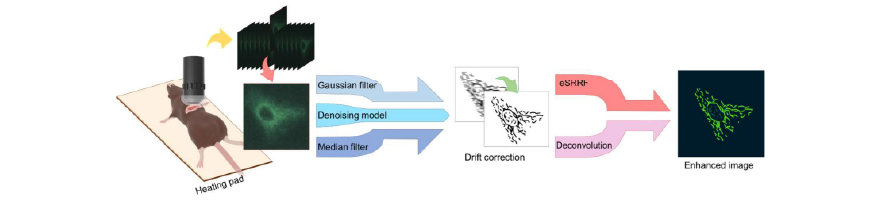
Combined Denoising and Resolution Enhancement Algorithms for Intravital Two-Photon Imaging
The study compared several image processing techniques, finding that the enhanced Super-Resolution Radial Fluctuations (eSRRF) combined with a trained denoising model significantly improved spatial resolution and mitochondrial structure visualization compared to other algorithms. Algorithms Evaluated: The study tested Gaussian and median filtering against a trained denoising model, followed by resolution enhancement using either eSRRF or […]
May 14, 2026


Combination of low-energy X-ray & citric acid to inactivate E.coli, S.Typhimurium, L.Monocitogenes
Combined treatment with 0.5 kGy X-ray and 0.1 % CA significantly decreased biofilm cell counts by 5.10, 4.31, and 3.96 log CFU/coupon for E. coli O157:H7, S. Typhimurium, and L. Monocytogenes, respectively.
December 3, 2025


Can you solve mouse CT imaging with 50um spatial resolution ?
MOLECUBES, a Bruker Company offers small footprint microCT for mice and rats, which meets most of your needs for in-vivo analysis and doesn't sacrifice the budget.
October 22, 2025

Subcutaneous delivery of MSC induces immunoregulatory effects in the lymph node
Mice were imaged under anaesthesia (2.5% isoflurane in oxygen), daily until the bioluminescence signal disappeared. Imaging was performed in an Ami-HTX Small Animal Imager and analysed with Aura Imaging Software, from Spectral Instruments Imaging.
September 12, 2025

A combination of systemic nanoparticles for caveolae-mediated gene delivery to the brain
This study shows that systemic mannitol induces caveolae in the brain endothelium. Mannitol-modified nanoparticles exploit this to cross the BBB, enhancing gene delivery.
May 20, 2026

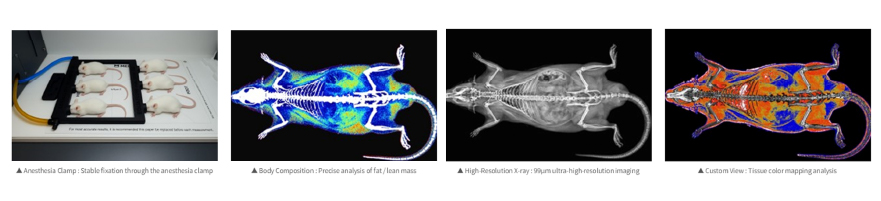
New product launch: InAlyzer2, Medikors
Next generation DXA Precision Analysis Technology
May 11, 2026

Development of new albumin‑binding radiotracers for PET imaging of CSF
In this study by Peltoniemi et al., PET/CT imaging using the X-CUBE (CT) and ß-CUBE (PET) was used to non-invasively visualize cerebrospinal fluid (CSF) flow and glymphatic system dynamics in rats.
November 28, 2025

Elevating Intravital Imaging with AI: Introducing the AI-Image Denoiser
AI-Image Denoiser, our best-in-class, AI-powered image enhancement software designed specifically for high-speed intravital microscopy.
October 21, 2025